
R&D PROJECTS
ACTIVE R&D PROJECTS
Our R&D team is actively working to develop new automated solutions to measure in an innovative way new parameters of growing request in the market and specifically:
- a new line of analyzers to measure TOXICITY in water, using luminescent bacteria biokits, for on-line and routine laboratory analysis, coupled with a portable device to measure genotoxicity on field using a particular type of low cost electrode
- a new line of analyzers for on-line and laboratory use to measure several classes of PESTICIDES in water using a special kind of fluorimetric technology and biokits
- a multiparametric device to measure HEAVY METALS for on-line and field portable applications.

|
The objective of SEWING FP5 EC R&D project was to create a system of continuous water pollution monitoring in real time. Small and relatively cheap miniaturized potentiometric sensors (Chemfets) were developed and applied in a Loop Flow Analysis based prototype developed by SYSTEA and integrated with a specific algorithm to mitigate cross interferences between detected parameters (NH3, NO3) and main interferents (Na, K). For additional information about the project, please click here. |
![]() |

The general objective of the EC FP6 R&D EXOCET/D project was to develop, implement and test specific instruments aimed at exploring, describing, quantifying and monitoring biodiversity in deep-sea fragmented habitats as well as at identifying links between community structure and environmental dynamics. Onboard experimental devices complemented the approach, enabling experiments on species physiology.
![]() |
Within the large project consortium, SYSTEA was involved to develop and test during an experimental trip in Azzorre Islands the multiparametric Deep-sea Probe Analyzer (DPA), integrated inside Ifremer'sw ROV Victor-6000; the probe was able to measure Total Iron and Sulphide near vulcano's hot plumes at -1.500 m depth during a cable driven monitoring session of some hours long. For additional information about the project, please click here. |

WARMER was a FP6 research project funded by European Commission to develop a real-time water quality monitoring system for Risk Assessment; it run for three years and it ended on 31-08-2009.
| WARMER was concepted as an interdisciplinary project to integrate R&D activities in a number of different disciplines, such as chemistry, electronics, information technology, networking and micromechanics. The final result was a relocable water monitoring floating platform equipped with a series of multi-parameter water quality sondes, to be effectively used for water risk management. | ![]() |
SYSTEA coordinated the project and produced the following main results:
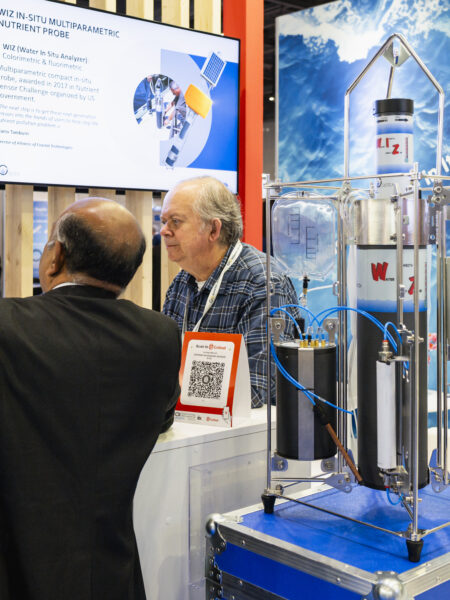
- the DPA Pro multiparametric in-situ probe for nutrients measurement was integrated and field tested in Venice for several months (click here to download a descriptive paper of the experiment) together with the platform, managed by a data-logger developed by the company Italian partner Sysmedia and remotely managed by the Zetaced Web based control system, still developed by Sysmedia
- a multiparametric in-situ probe prototype was developed and tested in laboratory to automatically perform unattended measurements of heavy metals using the so called Screen Printed Electrodes (SPE)
- a multiparametric benchtop analyzer was developed and tested in laboratory to automatically manage a series of miniaturized potentiometric electrodes, developed by other University partners, to measure Cl, NO3, NH3, Cd, Cu and other ions.
Field measurement data were linked to remote sensing Earth observations using an existing Web based remote data management system developed by NERSC partner.
For additional information and to download documentation, please click here